Showing posts with label travel. Show all posts

Monday, August 8, 2011

Alone?


"Alone?" they ask me, incredulous, concerned.  Not alone, I want to say.  I travel surrounded by ghosts.  The echoing whispers of their lives roll down these tracks and weave through the air, a constant murmur in the back of my mind that says "you are not the first."   My great-grandmother rode this train to New Mexico with a trunk full of beautiful clothes, and somehow this knowledge has changed the shape of my backpack; my great-great-grandmother followed this road when it was a path cut through the prairie and the wheels of our car must be pressing down on her ancient footprints; my great-great-great-grandfather picked his way down these country lanes on mule and buggy and I can smell that journey in the air, muleshit and sweat.  These empty deserts are full of cowboys and these industrial backwaters have known a thousand laborers.  None of us are alone.

Besides, I want to say, even without these accompanying shades, company abounds.  My mother texts, my boyfriend calls, my cell phone shows my twitter updates and who messaged me on Facebook.  Every time I step off the train I walk towards family, towards a world where the quiet corners of my brain must be twisted into a socially-acceptable shape, where at dinner I am polite instead of moody and warm instead of cold.  The most basic duties we take on when we decide to live with other people - I take them for granted until I visit my grandfather, who has dropped these duties (and others) in the dirt of his past.  Seeing him reminds me that I do not ever live alone.  And in my bags I carry letters, cards, loaned books, little bits of other people.  In the seats next to me and the rooms across the hall sit strangers and we ask each other "Where ya headed?" and share our stories.  Even in the middle of an endless desert, in a little steel-and-glass shell slipping between canyon walls, there's no alone.

But I know that's not really what they're asking me.  They're asking, "Aren't you afraid?"  And to answer I return to ghosts: my great-grandmother came out here when the west was lawless and Las Vegas a place where the sins were deadly, not sexy.  My grandfather barely spoke English when he crossed this country in the colored sections of these trains.  My great-grandfather hopped freight trains with hobos in the great depression, fleeing along the dark and dirty edges of a civilization that seemed to be crumbling away.  And I've got a cell phone and credit cards, the internet at my fingertips, friends in every state, and the kind of face policemen look kindly upon.  

This isn't scary.  If anything, it's too easy.

But I don't say any of this.  I smile and say last summer I traveled alone in the Philippines, and that this is far less scary - deflecting their concern to a trip safely in the past, one I clearly survived.  To one woman, with a friendly smile and precocious children, I dare to tell a bit of the truth - that traveling "just one, please" is easier, less stressful, because there's only me to deal with.  When something goes wrong, it's just me to fix it.  When the nights are uncomfortable and the mornings weary, there's no snappy arguments because there's nobody to fight with.  When the days are long and slow there's nobody to keep entertained - just me, and I stretch my arms and yawn and open my netbook and I know that I'm fine.  There's no negotiations over when to stop and where to eat and who needs what and how we get it.  When it's just me, traveling is easy.  She nods like she understands and her son’s green eyes are watching me and they remind me of myself, when I was ten years old, and really believed in adventures.

But I don't tell anybody that I'm not alone at all.  When I was in the Philippines I rode down a mountain on the back of a stranger's motorcycle and felt a single, pure moment of ecstasy.   I realized that no one in the world knew where I was, except for Jun-jun, my ride - and he didn't know who I was.  For this brief moment I existed only with and for and in myself.  And yet I knew I was riding this motorcycle, the quick way down the mountain, because I had promises to keep, and miles to go and so on, and that there were people waiting for me just around the corner of my life, and I could not disappear.  One moment behind the curtains, but the show goes on.  The web that ties me to the people in my life is stronger than the distances I test it with, far stronger than these teasing absences.  

Sometimes I have the face of a girl who is careful and does not make mistakes, the kind of girl who savors quiet adventures and plans a responsible career and makes clever small talk and will laugh at your jokes, and this is the face I wear to dinner on the train.  I lost my nose ring in California, I brush my hair each morning, I work on my laptop, I do not flirt with strangers, I do not drink, I do not curse, I do not argue.  I would trust me to watch my laptop.  I would let me talk to my children.  And this is the person strangers fear to see alone in the world, the person other people's parents reach for with concern.  

I am as vulnerable as they need me to be, obligingly nodded my head like a wide-eyed ingenue as they warn me that New Orleans isn't the world's safest place.  Strangers surround me with compassionate concern everywhere I turn, every time I return a glance.  And yet they think I am alone?  

In the dining car, surrounded by the noise of wheels on track and engine through air and wind through sagebrush and knives clattering on plastic, I sit by the window.  I sip coffee from a plastic cup.  I cannot see the other passengers; I'm staring out towards distant mountains as the sunlight turns golden on the sagebrush, watching two delicate deer, ears up high.  I only look alone.

Monday, July 4, 2011

Snapshots

In the observation car, ringed by picture windows, an Indian couple sits leaning forward like they're ready devour the mountainsides.  The woman, in an orange sari that brings a bit of color to the train's blue and white retro aesthetic, holds a video camera at chest level.  Every now and again they look down to make sure the camera is pointed in generally the right direction, and then they stare forward again, back out of the windows, camera rolling and entirely disregarded.

I think about the sunset I saw while heading west on the Empire Builder.  Swirling clouds, the roiling pinks and yellows, the reflection in a perfectly smooth pool - you know the type.  I whipped out a camera and snapped one shot, two, three, messing with the settings to try to get one striking one - and then I turned the camera off and set my forehead against the window.  The photos never turn out well with the glass in the way.

Who knows why we take these pictures?  To prove we were here, to make our friends and family jealous, to remind ourselves later?  We record these visions like its an obligation, something to get out of the way before we get back to the real work of staring. And staring.  And staring.

We won't print these pictures out and put them on our wall.  We won't turn to them in times of trouble or nostalgia.  We'll pack them away, and barely ever look at them again.  The photos are like stones we drop to mark our way - someday in the future, if we need to retrace our steps, these small and otherwise worthless artifacts will be there to show the path we followed.  For now we take snapshots, Hansel with a digital camera - snap, snap, snap, here's where we went - but keep our eyes, restless, on the tracks before us.

Sunday, July 3, 2011

Views Re-Viewed

It's true that it's almost impossible to say anything new about these landscapes.  The trees are green, the lakes are blue, the mountains are high.  You've seen the pictures, watched the movies, hiked these peaks or flown over top of them or seen them in Google Maps' satellite view.  There really aren't any surprises here.  Sunlight and blue skies are lovely, stormy cloud masses are imposing, riding by a sawmill really spoils the view.

You've seen it all before, but that doesn't mean you stop looking.  The views are unsurprising but - somehow - still astonishing. It's a reminder that novelty does not run the world.  Seeing some things once just isn't enough; you can't check a beautiful view off your bucket list.

The shaking, whirring mechanism of the train propels us forward in time, leaving monotony on the tracks behind us, and we get sucked into a pattern of endless appreciation that doesn't feel repetitive.  I think I could run this route on a loop and never get bored.  I've seen the crew gaze out at the mountain range with the same slack-faced calm as the rest of us.

Why are we fascinated by these well-known views?  Is this E.O. Wilson's biophilia?  I don't know.  All I know is that it's kind of irrelevant that there's nothing new to say about these mountains.  After all, it's not something new we're chasing with our eager gazing - it's something very, very old.  And it may not be novel, but that doesn't mean it's always the same.

The same green, the same blue, the same tall peaks, same white clouds, yes.  But the light changes as the sun sets lower.  The rolling range fades away into temporary flatlands and then an ice-topped volcanic mountain rises from the earth.  It's the same view, but everytime you look, it seems to have gained a shadow or lost a curve.  Who needs a new horizon when the old one is so teasingly out of reach, so temptingly shifting?

Friday, June 24, 2011

Why on earth do people move?

Traveling, even for just a little time and with just a little stuff, is a terrible nuisance.  There are floods that halt trains, computer errors that cancel planes, storms that bring the interstate to a bare crawl; even when those things go right, you'll deal with lost bags, inaccurate maps, rude strangers, uncomfortable sleeping spaces, odd smells, and really terrible food.  Language barriers and cultural misunderstandings, jet lag and exhaustion.  Oh, and everything costs more while you're traveling. Guaranteed.

And when you're moving - all the stuff to cope with, all the expenses involved, the worry, the breaking valuables, the crushed boxes, the pain of downsizing, and then replacing the things you downsized, and the cleaning of the old place and the new, of packing and unpacking, of learning the layout of a new town, finding new jobs, new childcare arrangements, new friends.

And just imagine what it would have been like before we had trains and planes and cars and credit cards and internet reservations and telephones and GPS - heck, cheap accurate maps, even.  The mules would get thirsty, or the cart would break an axle.  The cows would drink poisoned water and die (I'm an expert; I lost many a game of Oregon Trail this way).  The constant weeks on the road would wear on your family.  You'd abandon priceless heirlooms by the roadside.  You'd bury children along the way. You'd live for months packed into the stinking hull of a leaky ship.  You'd freeze at night, roast during the day.  Getting lost would be life-threatening, not just annoying.  With no travel guides or online ratings to check out, every decision about buying food, sleeping somewhere, following directions or stopping in a town would be a perilous judgment call.

So why do it? Why bother at all?

At some point in high school I remember learning that people immigrate for one of two reasons: to seek something good or to flee something awful - or both.  I wonder, though, if we might be able to look at all the reasons we popularly accept as reasons for travel - boredom, longing for adventure, curiousity, wanting to see a new culture, etc - and think of moving as just another kind of travel.  Especially back before travel was a widely available hobby of the middle class.  If you were making a modest living but longed for something exciting, new horizons, new faces, new tastes, you couldn't save up vacation leave and book a flight. Maybe the only way to find those experiences would be to pack up shop, sell some assets and relocate - and the relocation itself would be an exciting adventure.

It may be accurate to think about migration is as the push-pull of powerful economic, religious and sociopolitical factors, with personal whims and longings privileges immigrants couldn't afford.  Overall, people tend to move away from poverty and war and towards economic opportunities and political stability.  But to think this explains immigration and migration is an extreme oversimplification.

The other day I wrote on this blog that Prussia must have been absolutely awful if Montana seemed like a better deal - unless my ancestors just didn't know what they were getting into.  But when do we ever?

I've been rethinking that offhand statement.  Since I can't ever know their motivations for leaving a known land for an foreign place, obviously I should be careful about my assumptions.  And maybe they were fleeing an untenable situation, or seeking what they had heard was a land of prosperity.  But maybe, just maybe, they wanted something new and different.  The modern era does not have a monopoly on the desire for excitement - I think it would be a mistake to assume past generations were motivated by practicality and self-interest, when our own behavior so often displays impulses best summed up with a shrug and "I don't know, I thought maybe it would be fun."  

Or to put it another way: if the only way you could leave your hometown were to move away from it, would you do it?  Even if you weren't impoverished or repressed, and you had no guarantee of prosperity in a new town?

And if you don't think you would do it, can you think of anybody you know - any restless personality - that would?

I know I do.  The push-pull model of immigration is probably the most accurate way to talk about historical migration patterns, but on the individual level, we should remember to leave room for human impulses and irrational desires.

Without those, who would travel at all?


Seriously, travel is mostly awful.  Especially when half the country seems to be flooded, on fire, thunderstorming, tornado-stricken or all of the above.  If it weren't for restlessness and curiosity I'd be comfortably well-rested at home right now.  AND I'M NOT.

Stupid human impulses and irrational desires.

Wednesday, June 22, 2011

Back to rural Georgia for a moment of nutty reflection


I know that vineyards are the classic fantasy of blissful, aesthetically pleasing agricultural life - and who doesn't want to make boatloads of money, buy a vineyard in Tuscany and retire to a life of fine wine, blissful landscapes, and great food?  Such a pity that the fantasy conceals all that darned hard work.

But driving through Georgia, I slowed to a stop when I saw my first mature pecan orchard. Don't worry, there wasn't anyone else on the road.  And just like that, the idle fantasy of winery-ownership was replaced by a vision of pecan harvest.  Those old trees, straight and strong, spreading out their arms as they stood in wide-spaced roads - hundreds of them.  And beneath them, I am not making this up, were four or five absolutely beautiful horses grazing blissfully in the tree's shade, undisturbed by the drought and the sun's vicious rays.

I forgot about Tuscany, and started thinking a little closer to Tuskegee.

Just like vineyards, the peaceful vista disguised a real nuisance of nut harvesting and tree maintenance - or so my relatives told me.  But it didn't help - I still kept thinking about the calm beneath the trees. So I went back to take pictures, and alas, the horses were nowhere to be found.

You'll have to add them in yourself.  While you're at it, picture me in there, too, on a rocking chair with a glass of lemonade in one hand - and wine in the other, because I haven't totally given up on vineyards.

New York, New York

In New York City by myself with lots of free time, no map or guideback, and very little cash. What to do? What to do?


Get myself to Central Park, of course! and I only got a LITTLE lost on the subway...

Dear Diary, Today I learned the difference between "Express" and "Local"...


When Natasha collected my poor bewildered soul, the REAL tour of Manhattan started. Here's Park Ave!


The next day, I checked out the Highline, like Tasha said I should. IT WAS SO COOL.


Then I went to the meatpacking district. I bet these two businesses are great neighbors!


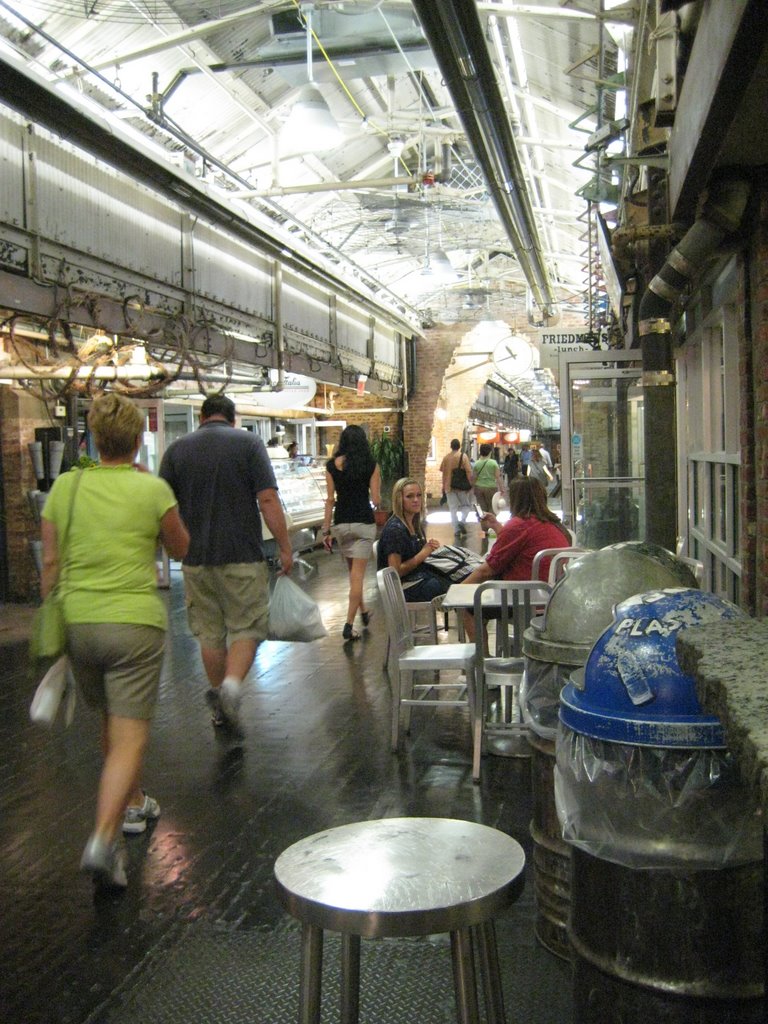
Did I go to Chelsea Market? Why yes I did.

Did I wander around Greenwich Village? Yup! Did I take any pictures? Nope!


Did I go back to the highline to play in Rainbow City? Yes I did!


And then did I watch the sun set behind the highline? well, not quite, but almost! It was a pretty good two days in New York... except for the many, many hours I spent talking to Amtrak reps.

But let's focus on the positive!
Posted by Picasa

Chillin' in George Bush

(the airport, that is)

So while the trains were a total wash (HA!) the planes ain't looking so hot either.  I was supposed to be on a plane that was leaving Houston for Denver over an hour and a half late and was also oversold by THIRTY people.  That means they had thirty more people than seats - and that's people confirmed for seats, checked in, seat assignments, everything, NOT including standby. Thirty!  Evidently they wound up with a smaller plane than they were supposed to have.  As you can surely imagine, there were a whole slew of really, really unhappy people.  I volunteered to get bumped (three hundred bucks and it looked like I would miss my connection anyway) which meant I was at the front of that line of really unhappy people.  I actually felt guilty - not just because I was so much less miserable than everybody else, but also because I think my net impact was negative.  I mean, one person got a seat on that plane because I volunteered, but it took the dude rescheduling me so long to do it that I felt like I was holding up the whole line. I think I ended up inspiring more fury than relief.

Next plane's delayed, too.  Who knows when I'll get to Montana?  If I had taken the train then I'd - hopefully - be somewhere between Chicago and Minneapolis right now, but I'd be on my own after Minneapolis.  Currently in Houston... well, we'll see.  I have 45 minutes of wifi, which is better than OH SPEAKING OF HAVING TO PAY FOR THINGS, Continental's got this "upgrade" where you can watch live DirecTV during the flight.  Which sounds great, except the tv shows were all utter crap while I was going to be on the plane, and of course you had to pay for it, AND that was the ONLY entertainment option - no free movies and NOT EVEN ANY RADIO!!!

I just took it for granted there would be a movie on a three-hour flight, so I didn't pull my book or crossword puzzles out of my big bag.  And then I saw they were running a preview for that one where the world tries to convince Liam Neeson he's crazy, and I was like, "sweet!" And then they told me I would have to pay $8 for it!!!  I'm sorry, your screen is about five inches across.  And you want to charge big-screen prices? And tell me it's for "DirecTV" and automatically that is awesome?  NO I don't want to watch ESPN or crappy HGTV shows, I just want to watch a freaking movie while I'm stuck in your rattly metal tube for hours.  And if you don't have movies, at least give me some radio!  Okay, I'm done complaining about it.  I am.  I prom - but seriously, what will they do next, charge you for oxygen?? - I promise.

Tuesday, June 21, 2011

A little rain never hurt anybody...

(Probably what Noah's neighbors all told each other)

So my TransAmerican Train Trip is undergoing a little revision, thanks to the weather in Montana.  A phone call around noon informed me that there was no way - not by the power of heaven or hell, let alone earthly forces - that Amtrak would be dropping me off in Wolf Point, Montana.  Flooding has devastated a few parts of Montana, and put Amtrak's tracks underwater, which - who knew? - is apparently bad news for trains.

People coming east can get from Seattle to Havre, Montana (though they have to take them by bus for part of it), and people going west can get from Chicago to Minneapolis - but between Minneapolis and Havre, YOU SHALL NOT PASS, says Conductor Gandalf.  I looked up a few options and all the buses would have got me to Montana later than I wanted (and that's IF the trains ran on time to get me to the bus stops, which, given that the schedule is now all messed up, is highly doubtful) and among the flights it was cheapest to go from NY.

Absurd, isn't it?  Three separate flights, totally almost 3,000 miles, and it's CHEAPER than a tiny little puddle-jumper out of Minneapolis.  Oh airline pricing.

So now, instead of sitting on a train headed for Chicago, I'm hanging out in NYC for a little longer - crashing with the BEST ROOMMATE FROM NYC* EVER, thanks Natasha!!!- and flying out of La Guardia in the morning.  And I won't be able to say that I looped the country by train... but I tried!  Rain, man.  Whatcha gonna do.


Incidentally, I can't remember if I mentioned this before, but the two stations I was going to visit in Montana were Wolf Point and West Glacier.  I think that pretty well sums up what you can find in Montana - things that want to eat you and giant blocks of ice.  Doesn't it make you want to build a tiny little house in the middle of an empty field and live throughsome  -40 degree winters?

Me neither!!!

Which really makes me wonder... just how awful was life in Prussia?  Must've been pretty much terrible if frontier Montana seemed like a good deal.  But then again, maybe they just didn't know what they were getting into...

I'm super behind on blog posts.  Let's see what I can do.

*see, Emily, no insult!

Monday, June 13, 2011

stop 1: Atlanta

I made it safe and sound (if a little delayed) to Atlanta, Georgia, where giant peaches perch atop buildings and everybody calls me "Sugar."

I'm currently hiding from the sun and hopping on a wifi signal at a Caribou Coffee in downtown Atlanta, and soon I will be taking my rental car down into the depths of rural Georgia.  A certain somebody who will not be named described this region to me as "hot, humid and mean."  Whoohoo!

Seriously, though, I am excited, so I won't spend too long typing up a blog post and I'll try to hit ye old dusty trail pretty soon.  Just a few things to note:

1. One of the conductors on my train had an accent EXACTLY like Kenneth's on 30 Rock.  I always though Kenneth's accent was completely made up, but turns out there is in fact a strain of Southern accent just like that.  File that under things-i-never-knew.

2.  I'd forgotten how surreal the Southern landscape could be.  There were times when the view out the train window looked like it was ripped out of a fantasy novel or a scifi film.  Don't know what I'm talking about? One word: KUDZU.  I didn't snap a picture but I'll see if I can sooner or later - imagine forests so coated in vines that you can't even see the trees underneath.  It's both beautiful and deeply creepy (and an ecological disaster, of course).

3. A caribou coffee employee just came by and offered me free samples of a pineapple coconut smoothie.  And then made me take two, because nobody else was drinking them.  Life is great.

4.  Does travel = freedom? Companies certainly promote the idea - my Hertz folder actually has FREEDOM written across it in giant yellow letters. Do people believe it does?  Is this an American concept?  Travel doesn't have to be linked to freedom - it could be tied to escape, to adventure; it could be seen as a mark of economic prosperity; it could be seen as a duty, or as self-improvement.  My rental car packet screaming "FREEDOM" probably has me biased, but right now I'm feeling like in America, we travel to prove our freedom - we go somewhere to prove that we could go anywhere.  Agree? Disagree? Should I stop with the national identity essentialism?

Sunday, June 12, 2011

i'm leaving, on a diesel train...

Is it mandatory, when leaving on a trip, to sing this song? I think it is.

So tonight - TONIGHT! - I depart for Atlanta.  And in Atlanta I pick up a rental car. And then I drive south to the part of Georgia that is almost Alabama, and also almost Florida.  And then I will drive up to the house of my grandmother's niece, give her the regards of all my family, settle into her spare room and start trying to explore my family history and what it means to be rooted in the soil of rural Georgia.

But right now - RIGHT NOW! - I kind of need to pack. Because we're looking at D minus 1 hour, where D is the time I must Depart in order to get to Charlottesville early enough for my travel terror to stay under control.

Travel terror, n. The almost-uncontrollable fear that all of your travel plans will be destroyed because of a traffic jam, a declined credit card, a clerical error, confusion over dates, tornadoes, terrorist attacks, unexpected rebellions, train crashes, lost cell phones, airplane-goose collisions, unscheduled apocalypses, acts of God, acts of man, acts of children, or action-movie-like-explosions.  The only known remedy is to leave your house three or four hours early for everything.

Anyway, I won't write a long post now. I just wanted to let you know that I won't have email access everywhere on my trip - I might not even have it OFTEN on my trip. I make no guarantees of frequent bloggage.  But wherever I have cell phone access, I can tweet (on my 20th-century-phone, lacking a keyboard and any-and-all smartphone capabilities, but texting twitter still works!)

So check my twitter - @camilareads - or look in the sidebar of this blog for frequent assurances that I'm alive.

My bag is calling, so Camila out.

Friday, December 3, 2010

bonjour

William can be a hard person to be a tourist with... sample quotes from a visit to the Tower of London:

"Well, that's a lot of rocks." (That would be referring to the castle itself)
"They're big and shiny, I guess" (That would be the crown jewels)
"It's really cold."  (Well, yes, it was, I'll give him that)

Oh, and here was his remark on Harrods:

"You know, this all seems excessive."

And Big Ben:

"It's not as big as I thought it would be."

I'm not making these up!  He is just plain hard to impress!

[William would like to interject here and say that it is not that he is hard to impress, but that he just says the first thing that comes to his mind.  Also, that he thinks "that's a lot of rocks" is the only reasonable reaction to the sight of a large castle.  He would also like to reassure my reading audience of 5 people that he is happy to be in London.  But if he wants to tell his side of the story he can start his own blog, so I'll be maintaining that he is a difficult man to impress]

Even William, however, has been wowed by Paris.  We visited the Notre Dame last night, after breathing a sigh of relief for having reached Paris at last (for the Eurostar was brought to its knees by a few inches of snow), so we saw the massive, massively creepy cathedral at its best - on a dark, cloudy and eerie night.  William was flabbergasted.  I will grant you that his reaction was more along the lines of "that must have taken so incredibly long to make!  Why would they do that?  Oh my gosh," than "Oh my, how ethereally beautiful," but at least he was awed, which is rare indeed.

And when we approached the Eiffel Tower, he said - and I quote - "This is so exciting!"  CONGRATULATIONS PARIS!  You have awed the unaweable.

(speaking of the eiffel tower - 704 stairs, people.  I am going to be so sore tomorrow)

In other news: why doesn't Hums have a field trip to Europe?  It should totally be part of the course.  Today I was in the Musee d'Orsay looking at Courbet's painting of himself in his studio - and needless to say I saw oodles of enormous French history paintings throughout our speedy tour of the Louvre - and suddenly I said, "OHH!"  Seriously, out loud in the middle of the museum, and I must have sounded like a prime idiot.  It all clicked and I dragged William over to say "Dr Smith was RIGHT, this IS an important painting - see, he's making this statement-- even the size is a challenge to the old institutions and conventions of art--"

A field trip.  Definitely called for.  Maybe it would also increase enrollment?

Also, I ate 4 meals today and all of them consisted primarily of butter, except for one that was all chocolate.  Ahhhhh paris!

Sunday, July 25, 2010

The journey is my heartbeat in this plane

I read this poem early in my trip, and thought of it again in a plane heading to Davao - a flight in some ways more daring and profound than my long haul across the Pacific, and yet an utterly prosaic trip.  I looked in my emotions and found not a trace of profundity, wondered at the absence, stared out the window, checked my watch.  Was I feeling what I ought to have been feeling?

A funny question, no?


The Journey is Everything

Montaigne believed the journey, in itself,
Was the idea.  Yet from this moving plane
I look down on the dazzle of the world,

Conscious of his words but wondering
When, when shall I be here, at journey's end?
The journey, said Montaigne, is everything.

Two hours ago the setting out began
With words of love.  It is too soon to be
In love with landscape, altering below --

The flight upriver and the dwindling hills --
As if I came for this, a traveler,
And every wisp of cloud were an obsession.

It is too soon  The journey is myself,
Concerned with where I was, where I must go,
Not with the clouds about me (what of them?),

Not with the morning skies -- nor would Montaigne
Have noticed them, his mind on other things.
The journey is my heartbeat in this plane.

Yet with more time?  Were the excursion longer
to the Cote d'Azur et d'Or, perhaps, La Mer,
the hyacinth fields of Haarlem, Tanganyika,

The river Lethe or the Serpentine,
The fortunate Isles or Nepal -- anywhere,
I might discover what his words still mean:

The journey, in itself, a thing apart.
But no.  These words are older than Montaigne's:
The sky is changed.  I have not changed my heart.

Helen Bevington

Thursday, June 24, 2010

o green world, o gray world

This country has so many kinds of beauty - the wild mountains of Mindanao with their waterfalls and coconut plantations, the endless, even rice terraces of Luzon, the underwater landscapes and white-sand beaches circling it all.   But I've spent most of my time far away from that beauty, firmly ensconced in the centers of cities.


I've taken dozens of interviews, all in big cities, most with people born in big cities, raised with smog in their lungs and a busy world outside their windows.  But I've also talked to transplants from the provinces, born in the far-flung rural regions of the nation who moved to the cities for a continued education, a better job, an upwardly mobile life.

There's a common thread in those interviews, the ones with the children of the countryside.  When they speak of their hometowns - with fondness, pity, regret, hope - they end with the same expression of longing.  "It's so beautiful," they say - they all say, in a room in a building on a block in an endless metropolis.  They describe their home island, or mountain, or beach, and say, "I wish you could visit - you should see it.  Just gorgeous."

It's hard to explain just how different these worlds seem - the rural, green, growing, stunningly beautiful and the harsh and dirty ultra-urban.  I've criss-crossed the States and seen a dozen cities and a hundred rural landscapes, but somehow I've never thought this hard about the contrast - maybe since I live somewhere between the two, in a city embraced by the mountains, with the city far smaller and less painful than the cities here, and the mountains - i confess it - less beautiful.

But here, with the distinction so pronounced, I find a strange question in my mind - is one world more real than the other?  It's irrational, I know, but as I travel on buses and boats and planes, crossing the imaginary lines between the two "worlds," they seem like they can't coexist - not equally.  Is the idyllically-beautiful country setting more authentic than the fume-filled, concrete-covered megalopolis?  Are the big business deals, momentous government decisions, the millions of intertwined lives in the cities more important than the isolated families out here?

And who suffers more - the fishermen in nipa huts, or the pedicab drivers in iron-and-plywood huts?

How can I possibly compare the two?  And yet, how can I not?

blargh

I've been having trouble motivating myself to get out and do tourist-y things... I know I should.  I mean, as long as I'm here, right???

But when I don't have interviews scheduled, I mostly find myself floundering, or getting online, or working on my budget, or something dull like that.  Take this afternoon, for instance. I had a morning interview, which I finished at 11, and then - freedom!  I could have gone to the beach!  Or the eagle conservation place!  Or the volcano!  Or the islands!  Or the pineapple plantations!

So many possibilities, right?

And yet here I am, in a cafe, reading feminist blogs and catching up on the news.  What a waste, eh?  I could wait to do this until I get home, but I can't see Philippine eagles at home!

I think it has something to do with being alone... hanging out at the beach by myself, or going to visit the volcano by myself, just isn't that appealing.  If I was here with friends, I think I would be all about getting out and seeing things - maybe even to an annoying degree - but by myself, I am FAILING at it.

Tuesday, June 22, 2010

Scuba diving and snorkeling off the southern coast


In the shallow waters by Talikud island, I try to remember to breathe slowly.  The divemaster floats above me, one hand always on my tank, the other in front of my mask, pointing - see the starfish?  the anemone?  the hidden urchin?  He waves a warning not to touch, and moves his own glove very close to a rock that, in a flurry of motion, turns into a surprisingly large fish.  He reminds me to equalize and we sink a little deeper, while a bright-purple crustacean, as long as my forearm, scuttles across the ocean floor.  I remember the warnings not to touch anything, but especially not anything too brightly-colored or too beautiful, while a stunningly pink, completely foreign animal waves gently from its coral habitation.  The sun has come out after the morning rains, and beams of white light shine through the shallow water as we slowly travel down the reefs.  Schools of tiny fish part around us while the larger creatures dive into dark shadows near the sand, and I am bug-eyed, watching it all.  When we surface, I pull off my mask and laugh.

Back on the boat, we chug our way around to another side of the island.  A school of flying fish pass by, bursting out of the water in a fleeting silver wave, bodies tiny and glistening in the sunlight, and we watch admiringly as we drop a new anchor.  Once we're settled in, and the flying fish have passed, I borrow ratty flippers and an old snorkel and jump into the comforting, warm water.  The water here is so shallow I have to work not to kick the coral when I tread water.  The sea is clear, blue, endless, and I swim over the reefs and marvel at the bright-blue sea stars and the forests of spikes.  I'm alone, a few other snorkelers visible only when I surface and look around, and I float so easily in this salty water that I feel like I could swim for hours.

But as I travel towards the island, the coral gets closer and closer to my mask until it fades away into sea grasses and patches of sand, and finally I stand, pull off my flippers, and walk onto a white-sand beach, littered with bits of coconut shells and dead coral, shaded by palm trees.  A few well-kept nipa huts stand on the far corner of the beach, fishing gear before them, but I don't see any inhabitants.  I stretch my arms up towards the sun, then I kneel in the sand, waves lapping at my waist, and stare out at the sea.

I dive back in the water, pushing myself back towards the boat, and reach the edge of the shallows - a coral-covered cliff that continues down into darkness.  As I float on top of the water, occasionally diving beneath to come face-to-face with a new kind of fish, I can see the real scuba divers as shadows, far below me, with bright-colored fins.  Columns of bubbles, glowing white in the water, rise from the deeps to mark their locations as they sink down along the cliff.

I circle the boat, and find myself above the spear fishermen, sitting perfectly still near the top edge of the cliffs, waiting.  They nod to acknowledge me, and I carefully paddle away, back to the shallow fields of coral, with their hiding fish and spiky dangers and the tiny, colorful spirals of fronds that vanish at a hint of movement towards them.  We've been on and in the water all day, and I am nowhere near tired of diving down to watch the life beneath the surface of the sea.

It's a hard life, huh?  Well, yes - just not for me.  On this trip, I'm with a woman's rights activist, one of my major contacts and a new friend, and another American student working as an intern for her group, and a whole slew of Germans and Filipinas working on issues of conflict resolution in Mindanao.  So between our conversations about colorful fish and arguments over dive equipment, we touch on issues that are currently tearing Mindanao apart - land disputes, religious conflict, the cycle of violence.  So oh, yes, life in these islands is hard.  Hard for the guerrillas in the mountains, I'm sure, and for the people who must live in fear of them, and for the soldiers always on high alert, and for all the families of the tens of thousands of dead.

But not for me, no.  Life is definitely not hard for me.  I pulled off my snorkel mask and wrote this in my journal on the prow of a boat slicing through sky-blue seas, beneath a warm sun, on a lazy Sunday afternoon.  Unfair though it is, my life is good indeed.

Monday, June 21, 2010

the road to Batad

The road from Banaue to Batad is longer than it looks - a tiny little line on the map, it took an hour and a half to travel by van, a slow and windy path clinging to mountainsides as it climbs from the valley towards the sky.  And it's rough, all gravel and mud and deep-worn ruts.   Occasionally we hit a stretch of concrete around a curve, surrounded by signs advertising the politician responsible for that particular patch of pavement.  But after a few hundred feet the smooth road always ended abruptly, the transitions the bumpiest spots of all, as the path lurched back from road to bumpy trail.  Not just rough, in truth, but varying shades of impassable - jeepneys and tricycles and stubborn cars can follow the road partway, up to the junction, but only vans and single motorcycles travel from the junction to the saddle, and from the saddle, the only way into Batad is by foot.

But above all, the path to Batad is beautiful, breathtakingly beautiful.  The road hugs the curves of the mountains, dipping in and out of the grooves of old cliffsides, looking over valleys and across to gentle peaks.  The ancient mountains are painted in a thousand shades of green, completely forested in a curious mix of palm trees and pines and strange leaves I can't begin to name.  But most striking of all the colors, and most breathtaking of all the vistas, are the yellow-green rice terraces cut neatly into the sides of the mountains.  Some giant once cut out stairways from the valley floors to the mountaintops, or God swept through with an Xacto knife and pared away the cliffsides.  If we forget our own history and thousands of years from now these marvels remain, what myths will we tell ourselves about ther origins?  Surely they could not be crafted by human hands - not so many, not so neatly, not so tall.

The terraces are simultaneously artificial and completely natural.  They look too sharp, glow too brightly green, and seem too angular among the smooth curves of mountains.  I thought of sci-fi novels and terraforming, of wrestling nature into tight constraints and binding her - but with stone and mud instead of steel.  And maybe its those natural materials, or the age, or the beauty, but the terraces also look like they belong.  Their sharp, flat surfaces undulate with the hills and their edges fade smoothly into the trees, and after the first shock at the sight of them, they come to seem as much a part of the landscape as the trees and the sky.  Small stacks behind invididual, isolated houses, entire mountainsides serving small villages, distant curves on a mountain too far away to see any houses at all - around every bend were new landscapes to admire.

But since you can see so many beautiful terraces on the road to Batad, why bother to visit the town?  Why make the effort, I wondered to myself - grumbled to myself - as I followed my guide, Margie, down the steep steps that lead to Batad.  As I hid from the sun beneath umbrellas and palm trees, as we passed bamboo huts and sheet-metal houses, as I calculated just how much this trip was going to cost me, I wondered if it was worth the bother.  And then we turned the final corner, and the amphitheater lay before us, and I gasped as I looked out over the bowl-like valley, filled from bottom to top with perfect stone-walled terraces, and I understood.

As we picked our way down the steep steps, across the paths along the terraces, and down towards the waterfall that lies behind Batad, Margie and I talked.  Mostly, I asked questions.  Some were stupid questions - "is this really the only way into the town?"  Some were boring questions - "how many people live in the town?"  Some were questions she couldn't answer - "How old are the rice terraces, again?"  "Very old, very old... they were here before I was born," she said.  I asked about how one goes about harvesting rice, about how many times she makes this hike in a day, about the schools and the politics and health in the community.  And finally I stopped asking questions and started just listening.

Margie talked about the rice harvest - said despite those expansive rice terraces, the community never grew enough to sell commercially, but only enough to support themselves.  And that this year, because of the El NiƱo that came so strangely early, destroying most of their crop, they wouldn't even have that.  And as she spoke I thought about the young activist with FDC, leaning forward across the table with fire in his eyes as I asked, "wait, what does 'climate debt' mean?"  and of the posters behind him declaring "the global north caused climate change... and the global south is paying the price."

And Margie talked about how she was at college, studying information technology, until the tuition became too much for her family to pay and she had to drop out.  She said, "financial issues only," and repeated it, fiercely, seeming to insist that she could have stayed, that she was smart enough and working hard enough, it was only the money.  And so I thought of the activists at Kabataan, the youth party-list, and their anger and frustration as they described their failed attempts to block the 300% tuition hike in the public university system.  Margie stepped lightly down the rocky path, stopped to pick a stone out of her thin flip-flops, and I thought of computer technicians and trail guides.

She mentioned her kids, and then her absent husband, and the hatred directed towards her by members of the community who knew she now had a boyfriend.  And I thought of the ban on divorce, and an older activist shaking her head when I asked if she though the Philippines would ever legalize divorce.  And Margie described being a single mother, and relying on her parents to help her care for her young children, and I thought of the young woman who was organizing call center workers, who wouldn't look at me when I took her picture, who said, "the single mothers, you know, if they miss just one day of work because their kids are sick, they get fired."  And I tell this to Margie and she nods, slowly, and sighs, and points to the right path through the verdant rice terraces to all the sights of Batad.

The waterfall was beautiful, shockingly cold, surrounded by greenery and fronted by a bamboo-and-palm-frond pavilion.  White Western backpackers and our brown-skinned guides slowly descended the trails, all of us visitors gasping in the heat.  An old man in traditional Ifugao garb sat in a Nipa hut, waiting for tourists to take pictures of him, while behind him in the little town, the grass of the nipa huts had been replaced with plywood and galvanized iron.  We passed men building a home around a tree, using machetes to notch the wood and bolstering the walls with bamboo.  I took pictures, ceaselessly, and kept listening.

Margie confessed that she has a dream - she wants to become an OFW, an overseas foreign worker, one of the millions of Filipinos and Filipinas deployed around the world to work on cruise ships, clean floors, care for the elderly, wear any of a thousand different uniforms.  She said she doesn't care how hard she has to work, or how many hours, and I said it must be hard to leave your kids to move to another country, and she said simply, "Yes."  And I remembered N., in my very first interview here, breaking her easy good humor and optimism to scowl as she said, "You know, the biggest export of the Philippines is Filipinas.  It's not right."

And Margie said she needs 35,000 pesos, and she paid 10,000 as a down payment, and needs 25,000 more, and isn't sure where or how she'll get it.  And I calculated in my head that that's $500, give or take, and I thought about how I'm paying her about 700 pesos for an entire day's hot work, which seemed like a lot this morning, but is only $15.  I thought about what labor is worth.  And Margie said she knows she'll have to work very hard, and I said to be careful, that lots of those programs are dangerous scams, and she shrugged.  She said, "All I care about is that I work somewhere that includes food.  I don't want to have to be hungry.  But anything else..."  And despite myself, I think of the young members of the anti-trafficking network, and the women who get trapped into prostitution rings, and the desperation that leads them to trust their lives to anyone who promises to take them out of the Philippines.

I ate lunch overlooking the terraces, wrote a letter that I've lost, watched a baby play with an empty Coke bottle and dogs beg for my scraps, until I asked Margie to guide me back to the top.  I had an appointment with a motorcycle - the fastest way back to Banaue, the best way (my van driver promised) for me to make it back to my bus in time.  After the ride up these mountains, I was more than a little bit wary of taking such a trip back down, but I checked my watch and sighed as we slowly climbed back towards the sky.  Margie asked if I would put her number on the internet, so other visitors could call her as their guide - she called them her 'guests,' the people she guides - and I said yes, of course, I can do that.  And she smiled and gave me her number as we climbed towards the top.  Two boys - they looked young, so young - carried rolls of galvanized steel down the mountain, and middle-aged women carried huge sacks of rice.  It's a long, hard walk to Batad.

And then we were back at the saddle, in the mid-afternoon heat, and Jun-jun was waiting with his motorcycle - my knight on a shining Honda, ready to help me catch my bus.  I took a deep, deep breath and climbed on behind him.  My camera strapped across one shoulder and my purse across the other, bandolier-style, I gripped his waist, said a brief prayer - "God, if you're there, please don't let me die on these mountains - they're beautiful and all, but I promised my parents I'd come home!" - and off we went.

I am honestly not sure which I should have been more scared of - the rocks filling the road, as big as my head, and the sound of wheels sliding across gravel as we skidded around turns, or the fact that the road was smoothest close to the edge, so we spent the whole ride skirting the edge of cliffs.  Probably both should have had me terrified, but after we started down the road, I wasn't scared at all.  Maybe it was acceptance of the fact that at this point - helmetless, bare-armed, in the middle of the mountains, on the back of a motorcycle, no cell phone service - there wasn't much I could do, so why worry?  Maybe it was the beautiful scenery, keeping me distracted as we slipped round yet another turn, gravel grinding, another green-covered mountainside opening up before us.  Maybe I'm just stupid.  Certainly Jun was no comfort - when I commented, "You're quite brave to ride a motorcycle down these mountains!" he nodded seriously and said, "Yes, it's very dangerous."  (Note to the Juns of the world:  NOT the reaction a nervous passenger is looking for!)   But for whatever reason, as soon as the wheels started turning, my fear fell out of my pocket and stayed somewhere on the rocky ground on the top of the saddle, while I headed down the mountain.  Pulse calming, I settled in on the back of that motorcycle as the sun started to set behind the mountains.

We drove through a world that seemed like it must have stopped existing eons ago, a world I once thought was only found in the pages of National Geographic and history books.  A tiny bamboo house sat precariously on the edges of the cliffside, no other habitation in sight, only a small stack of rice terraces and a little vegetable plot to feed the inhabitants.  An old woman, her back so arched it seemed a wonder she could walk at all, held herself up on a wooden stick as she slowly approached the front door.  Skinny dogs crossed the road before us, chickens and roosters clucked at its edges, and we passed onto the next mountainside, pure wilderness.

And another curve, and we were surrounded by a cluster of homes and a bevy of children, who shouted a greeting and all waved hello.  One boy held his fingers in the shape of a gun, and carefully pointed it at me as we rode by.  I waited for him to pull his invisible trigger, but he never did - just kept his fingers cocked, waiting.  I thought of the "activistas" that I'm not interviewing, the ones who used to live in these mountains but have shifted farther south.  I thought, I admit it, of all the guns of colonization.  And then I reminded myself that he's a kid, not a blank slate for projecting all my own ideologies, and that Margie, too, and the whole village, and all of these mountain inhabitants, are people whose lives I do not know or understand.  They are more than supporting evidence for the arguments of activists, more than illustrating examples. And I looked back behind me, and the boy was still pointing the barrel of his index finger directly at my back, legs spread in a strong stance, ready to fire.

And another curve, another mountain, another valley, another line of cliffs.  A woman with a baby strapped to her chest fanned herself in the shade of her home.  I smiled at her as we passed and she looked up in surprise, then smiled back at me.  Small children played in front of the door, and three boys ran towards us and followed us down the road, shouting in Tagalog.

"What are they saying?"  I leaned forward to ask Jun.  He turned his head to listen.

"They said, 'Say goodbye!  Say goodbye!'"

And we skidded around another curve, and I looked back, and they were gone.

Friday, June 11, 2010

why yes, I would indeed like some cheese with that

so i've talked about what's great about traveling... nice people, interesting food, new experiences, beautiful rice terraces (what's that? you say I HAVEN'T talked about the rice terraces? and haven't postedp pictures either?  well golly gee.  anyway - they're beautiful!)...  so maybe you're saying to yourself, but Camila, why aren't you complaining about anything?

Okay.  Probably nobody in the world was thinking that.  but I'm going to complain anyway.  Here's what sucks about my trip:

1. getting around.  A) metro manila is very, very large.  B) the transportation system is complex and confusing.  there are at least 6 major forms of transportation and only 1 of them comes with maps.   C) I am not centrally located. D)  traffic is terrible.  E) I am really, really, really bad with directions.  you... you have no idea.  and usually it doesn't bother me - i get a little lost, eventually I figure it out, whatever - but HERE, because of items A-D, I am already spending hours every day just getting from place to place.  Add in E - specifically, the fact that I have, in a single day, spent multiple hours being LOST or suffering the consequences of getting lost and no i am not exaggerating, HOURS - and my abysmal sense of direction leads to a horrific amount of time wasted.

2. internet... I have three choices for internet and so far they are all pretty obnoxious.  A) internet cafe... expensive, no privacy, i always feel awkward putting in my passwords on a public computer.  B) a USB modem, which is very convenient but infuriatingly slow, or C) wifi in cafes etc - which would be great if it worked, but my 4#$!#@#@$@ netbook won't recognize any wifi signals anymore. it's a netbook!  the whole point is to get on the net!   and it's not just annoying because I want to browse the web or facebook or publish things here - I actually have emails I need to read for my research!

3. the heat.  it's... it's hot.  that's all.

4.  being lonely.  This is my first time really traveling by myself, and... well... I'm just glad that I'm interviewing people.  It forces me to meet folks (four or more per day, so far!!) and talk to them, gives me company, and since we often meet for meals, reduces the number of times I have to eat alone.  but I still spend a lot of time asking for tables for one, people-watching, or gazing out the windows of buses/jeepneys/taxis (see item 1).  mornings are fine, since I'm dragging myself out of bed and getting ready, and my middays are usually busy, but evenings - evenings get more difficult.

5.  sleep deprivation.  I might possibly be very slightly overscheduling myself... by which I mean, I've taken over 25 interviews in the last week and a half, and toured three communities, and it's not left me much time for sleeping.  but I'll try to do better... Hi, Dolores!

Tuesday, June 8, 2010

trashtown

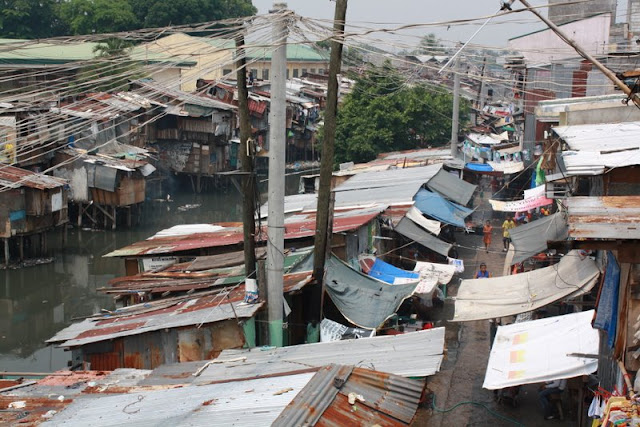
this afternoon i climbed to the top of a mountain of garbage, overlooking an urban slum in Malabon, where children played on top of the trash.

this evening i ate dinner at a shiny, glitzy mall, in the fanciest pizza hut I've ever seen in my life, with a bill that - while rather modest - could have fed dinner to dozens of kids in Malabon.  I have been thinking about money a lot lately, in case you can't tell.


visiting a slum - or a squatter community - or, to use the proper term, an informal settlement - was a pretty unexpected experience.  Unexpected because... well, I should probably wait a little longer to process everything i saw and smelled today, but whatever, I'll just write off the cuff here.  It was way more enjoyable than I'd expected.

that might sound terrible, I don't know, but when I think of communities of the urban poor in the global south, I think of the pictures on the pamphlets that ask you for money - malnourished children and dreadfully diseased families.  and i think of crime and violence and general misery.

and the community we visited today - well, let me start by saying that I don't mean to say it was rosy.  it certainly didn't smell like roses.  it was literally built on top of trash - an old pond filled with garbage until it was solid enough to construct ramshackle houses on - and it smelled like it.  and looked like it.  and as an informal settlement it has huge, huge problems.  regular flooding.  regular fires.  contaminated water supply.  flimsy, tiny houses.  hygiene issues. unmanaged human waste.  high incidence of preventable childhood diseases like diarrhea and dengue.  unemployment, of course, and poverty, and hunger, and uneducated children.

and see, doesn't that sound terrible?  i mean, it is.  it is terrible.  but if you read that catalog of challenges, you might picture a perfectly miserable community full of the ill, dying, dreary, depressed, starving and generally agonized.  i mean, that's what i pictured.

and instead, i found... people.  what an inane observation, but there ya go.  People - playing games, sleeping, doing each others' hair, cooking food, washing their children or their laundry, working, building houses, repairing houses, watching TV, watching youtube videos, laughing at the crazy foreigner.  children playing hopscotch (i forget the tagalog word) and, as soon as they saw me and my camera, chasing me down to mug for a picture and practice their english.  "What's your name?" "what's your name?"  "What's your name?"  "Hello!"  "Thank you!" "What your house?"  "What your age?"  "What your favorite animal?"  K said, "it's because you're so white," and then he laughed, and said, "so, SO white!"  and B, as American as me but far more Filipino, asked what it was like to be so obviously a foreigner.  I shrugged, and said for the fiftieth time, "Camila.  What's yours?"  And the children laughed, and their parents smiled, and I smiled back, and another kid asked, "What's your name?"

I guess the stupid, obvious lesson i learned today is that desperately poor communities are, in fact, still communities.  And not necessarily miserable ones, for all their problems.  Thursday K is taking me and B to another community that once was much like the Malabon settlement and now enjoys greater stability and healthier living conditions - so i bet my next obvious lesson will be that the problems can get better.  Get excited for more incisive observations like "people are people."

Anyway, I really am not trying to discredit or diminish the suffering caused by inadequate and unhealthy living conditions.  But i am trying to express - well, let me put it this way.  I thought I was going to have an expression of pained sympathy engraved on my face after spending two hours touring a slum community built on a dump and full of impoverished families.  And instead my face hurt from smiling so much.  and that surprised me.

Sunday, June 6, 2010

the spirit is willing, but the ligaments are weak

walking down the dark streets of Baguio, heavy pack on my back, hurrying to catch the night bus to Manila... no doubt you can see where this is going... i made the sudden acquaintance of a rather large pothole, quickly followed by that old familiar feeling of my ankle giving out, and then an up-close encounter with the surface of the road.  Strangers came to help me up, and I lied and said I'm fine, just surprised, and limped down the road to my bus.

I talked myself down from my fury as I went.  After all, it's not a BAD sprain as sprains go - I mean, I've had bad sprains, and this wasn't the blinding pain of one of those.  Maybe that physical therapy was good for something... that's what I told myself, anyway.  And besides, I told myself, it's a good thing that this happened now instead of two days ago - certainly couldn't have hiked to Batad on a bum ankle.  And maybe this will serve as a good reminder that I need to do my ankle exercises!

See how hard I was trying to stay positive?

Anyway, I have the morning off, so I'm sitting around icing the cursed thing... but i have two interviews this afternoon, and more every day this week, and three trips to walk around squatter communities, and I'm not sure what I'll do but I think it will involve a lot of taxis.  Which will be expensive. But what can I do, eh?

I guess I'll go hobble to the mall for ace bandages now...

Saturday, June 5, 2010

the kindness of strangers

OK i have about 50 bajillion things to blog about, now that I finally have some time to breathe.  but where to start?

let's start with how NICE everybody is.

answer: SO NICE.

I mean, the people I've interviewed have absolutely overwhelmed me with their kindness.  First they give me their time - up to two and half hours, sometimes, that they take out of their busy days to patiently answer my questions - and they let me ask them questions of an often personal, controversial or sensitive nature.  That is generosity in itself!

And then on top of that - I have been fed home-cooked meals.  I have had platters of fresh fruit placed in front of me as the tape recorder was running, and been given plates of local desserts with orders to try them, tell us what you think, we can talk again after we eat.  I have been given an umbrella, because it was raining, and I didn't have one with me.  I have been given money for the jeepney fare, because I didn't have any small change and the taxis were all full.  I have been given travel advice, and directions, and rides.  I have had taxis hailed for me, with directions in Tagalog for the driver - and strict lectures not to rip me off.  I have been walked to the train station to make sure I don't get lost. I have been invited to rallies, of course, and everyone has tried to teach me Tagalog.  And I have been overwhelmed - I just don't know what to do, how to be properly thankful!  Salamat po, I say, Maraming salamat po, and I switch to English but even there I don't have the words - don't know how to say you shouldn't have, that I should be feeding you, that you are too too kind, and that you have no idea what this means to me that you are so kind.

And not just in my interviews - everybody I meet is just too darn nice to me.  They say "are you traveling alone?" and when I say yes, their eyes grow wide and they say - I will walk with you.  Don't stand there, come in here.  I will call you a taxi.  Do you know where you are going?  Who are you meeting?  What time do you need to catch your bus?  No worries, we will help you.  You said you are hiking alone?  I will find you a woman guide.  Yes, I know where that is - but go down this street, not that one.

I think I might actually be safer traveling alone than I would be if I were with friends, because while I haven't met a single person who has tried to take advantage of me, I have met dozens who were very concerned that I would be taken advantage of.  I walk around shielded by the kindness of strangers, who pass me off one to the other saying "take care of her, brave girl, she's alone!"  Saying "Text me when you get there so I know you're safe, here's my number."  Saying "she's a quarter Filipino, eh?  But speaks no Tagalog!  She is here for the first time.  Feed her something good, opo?"  Telling me, "don't pay him more than 500p, ok?"  Telling me, "the inn isn't open on weekends," but it's raining and dark out, and there's nowhere else nearby, and they look at me for a long moment and hand me the keys to room number 12.

(the moral of the story might be that for everybody back home worrying about me, I promise you there are five people here worrying about me, and between all y'all - and, you know, ME, I think I'll be okay.)

SO NICE!  I have only had one taxi that didn't use its meter - the big warning in all the guidebooks is to only ride metered taxis, at risk of being ripped off.  I told the driver I was worried I would miss my bus (which was why I didn't notice the meter was off, in fact), and he asked where I was going, and he tut-tutted at the fact that the last taxi I took had brought me to the wrong station, and he told me he would get me in time.  As we wove terrifyingly in and out of traffic he told me he had only made it through 6th grade, that he went long enough to learn some English and then his family had pulled him out of school so he could work.  His English was nearly perfect, but he said it was only so-so.  He asked if I had visited any of the squatter communities, said I should, said I couldn't do it alone, I needed a Filipino with me, but that I should go to see the other side of his country.  He said the Philippines was deeply broken in ways that were so hard to fix.

He said, "there's your bus.  No, no, I'll pull up right beside it, it's so dark out.  You have a reservation?  Good.  Go to the ticket booth, no, no, i'll get closer, there you go."  And I said, "your meter!  It's not on!" and laughing at myself - because whatever, sometimes you get ripped off, it happens - I said, "How much am I paying for this trip, huh?"

And he shrugged, and said, "How much can you afford?"

I am 85% sure I paid him less than the meter would have been - I didn't mean to, but I couldn't think about how much it should be.  and I am 100% sure I paid him less than I could afford, 100% sure i paid him less than I should have.  And he just told me to have a good trip to Banaue.

And on the commuter trains, stuffed full to bursting, when there's no room for anybody to move at all, people shift so that I can reach the door.  I don't know why - because I'm white?  because I look so young?  Because I am so clearly out of place?  They let me go first down elevators and escalators, they open doors for me, they translate.

And I want to ask, why are you being so nice?  And Walden tells me that Filipinos love Americans, "which is funny," he says, "you would think after all those years of colonialism there would be more bitterness, but there you go."  And I think that I am so lucky, and I feel so wealthy, so privileged, so guilty.  So grateful.  And I want to say, I am sorry that you are being so nice to me.  I should be so nice to you.  I want to say, I am sorry that I need your help.  I want to say, I am sorry that I am not helping you.  I am sorry that I do not speak Tagalog, that I know so little, I am sorry I cannot give you back what you have given me.

And instead I say, Salamat po.  Maraming salamat po. Thank you, so much - a thousand thanks.